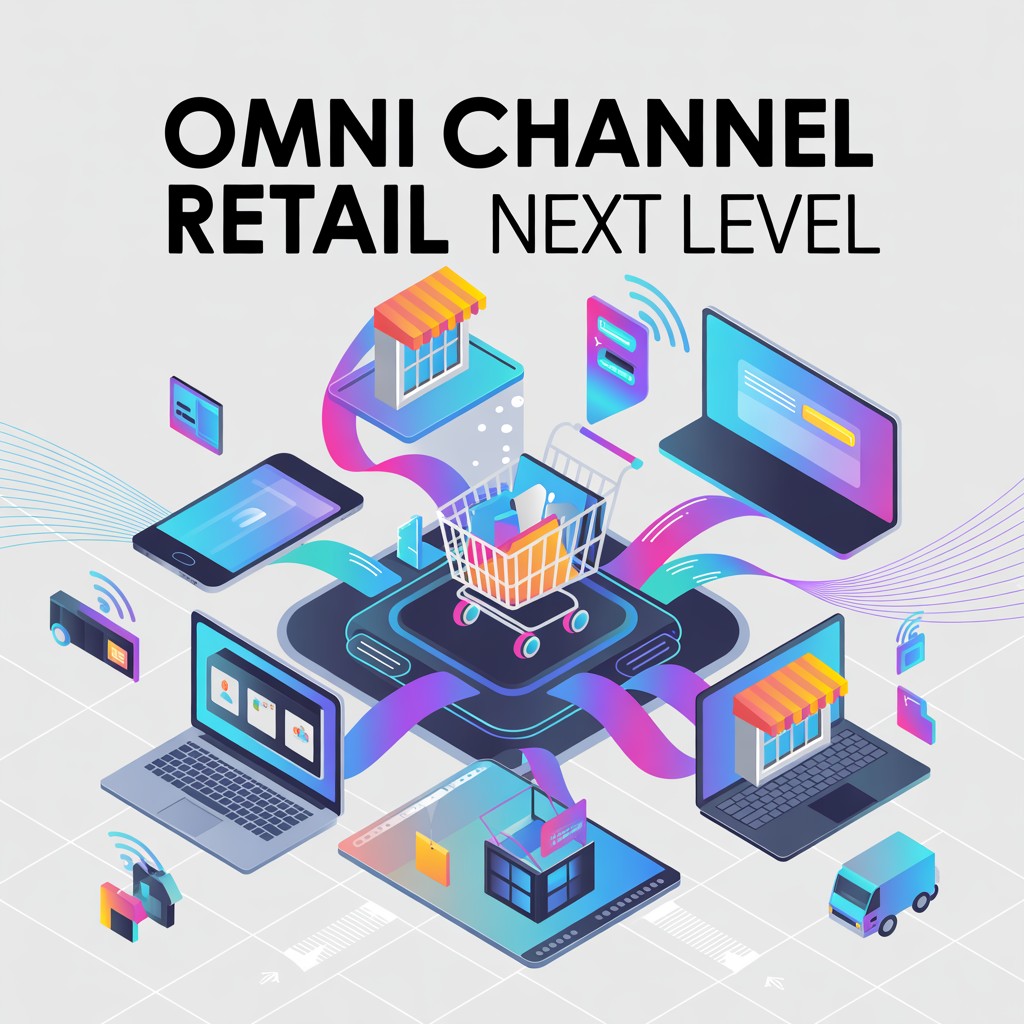
Next-Level Omnichannel Retailing: Rare Insights and Strategic Game-Changers Transforming Customer Journeys
The race to capture customer attention and loyalty has never been more intense.
Today’s consumers effortlessly jump between apps, websites, social media, and brick-and-mortar stores.
For brands that want to lead—not follow—omnichannel retailing is no longer just a smart strategy; it’s an operational imperative.
Yet while many companies claim to be “omnichannel,” only a select few have cracked the code.
These market leaders have moved beyond the basics, embracing next-level tactics, leveraging rare insights, and deploying strategic game-changers that redefine what a customer journey looks like.
Here’s how they’re doing it—and how you can, too.
The Evolution of Omnichannel: Beyond Just “Being Present”
Traditional omnichannel thinking focused on presence: making sure a brand was available wherever customers might be shopping.
But next-level omnichannel retailing is about orchestration: creating unified, intelligent experiences that feel effortless to the customer.
Today’s most advanced retailers are doing more than simply connecting channels—they’re synchronizing data, predicting intent, and customizing every touchpoint.
The result? A seamless journey that feels as personal as it is powerful.
Rare Insight #1: Omnichannel Isn’t About Technology—It’s About Mental Models
Many brands make the mistake of thinking omnichannel success is primarily a tech issue. In reality, it’s about how an organization thinks about the customer.
Rare insight: Leading retailers embed omnichannel thinking into the DNA of their organization.
They don’t treat digital and physical as separate teams—they empower cross-functional units to view the customer experience as a continuum.
Every decision, from marketing campaigns to inventory placement, starts with one question: How does this serve the customer across all touchpoints?
Retailers like REI and Nike embody this mindset. Their teams work across channels with a unified goal: serving the customer wherever and however they prefer to engage.
Rare Insight #2: Frictionless Experience Is the New Loyalty
Forget points and punch cards—today’s most powerful loyalty driver is convenience.
When customers can move effortlessly between browsing, purchasing, and returning—without hitting snags—they return more often and spend more.
This rare insight has fueled game-changing innovations such as:
-
Universal shopping carts: A customer starts building their cart on mobile, adds more via desktop, and completes the purchase in-store.
-
One-click returns across all platforms: Customers can return online purchases in-store or vice versa without re-entering data or reprinting labels.
-
Proactive service resolution: Systems that detect issues (e.g., a delayed delivery) and trigger proactive customer service before the customer complains.
These frictionless elements are subtle—but powerful. They build trust and brand affinity in ways traditional loyalty programs can’t.
Strategic Game-Changer #1: Omnichannel Fulfillment as a Competitive Advantage
Speed, flexibility, and accuracy in fulfillment aren’t just logistics—they’re part of the customer experience.
Leading retailers have transformed their fulfillment models into strategic weapons.
Walmart, for example, has turned stores into micro-fulfillment centers, enabling faster delivery and curbside pickup.
Meanwhile, brands like Zara use in-store inventory to fulfill online orders, reducing shipping times and increasing stock turnover.
Game-changing tactics include:
-
Distributed order management (DOM): Automatically routes orders to the most efficient fulfillment point (warehouse, store, or third-party).
-
Smart demand forecasting: AI-powered systems predict regional demand to pre-position inventory closer to customers.
-
Same-day local delivery: Partnerships with gig economy logistics networks to offer Prime-like delivery speeds without the infrastructure.
These fulfillment strategies don’t just save time—they drive revenue and create the kind of convenience customers will pay for.
Rare Insight #3: Channel Behavior Predicts Lifetime Value
Retailers that track how customers interact across channels gain rare insights into lifetime value and intent.
For example, studies show that customers who engage through three or more channels are 250% more valuable than those who shop through one.
This insight fuels powerful segmentation strategies:
-
Multi-channel nurtures: Tailored emails and ads for customers who browse online but haven’t converted in-store.
-
Loyalty tiers based on cross-channel behavior: Higher rewards for customers who engage across app, site, and physical locations.
-
Predictive upselling: Suggesting products based on a customer’s unique cross-platform history, not just recent clicks.
Brands like Sephora excel in this area, building robust customer profiles that merge online and in-store behavior to deliver hyper-relevant offers and support.
Strategic Game-Changer #2: AI-Powered Journey Orchestration
While personalization isn’t new, the ability to orchestrate real-time, context-aware journeys is revolutionizing customer engagement.
AI-powered journey orchestration platforms analyze behavior across touchpoints and trigger personalized experiences at scale. Imagine:
-
A shopper abandons a cart on mobile and receives an email an hour later—with the abandoned items and a store locator for nearby availability.
-
A high-value customer walks into a store and is greeted with a custom offer on the app based on their recent online wishlist.
-
A shopper browses winter gear, then sees personalized blog content about layering and packing for a ski trip.
This level of real-time relevance feels natural to customers—but requires complex, behind-the-scenes intelligence.
Brands using tools like Salesforce Marketing Cloud or Adobe Experience Platform are already building these dynamic experiences and seeing significant lift in engagement.
Next-Level Practice: Unified Experience Design
Beyond data and tech, next-level omnichannel leaders focus deeply on experience design.
They ensure that every customer interaction—visual, verbal, digital, or human—feels cohesive.
This goes beyond branding. It means:
-
Visual continuity: Matching imagery, UI, and tone across all touchpoints.
-
Consistent messaging cadence: Ensuring a customer who browses online isn’t flooded with emails and text messages and app push notifications.
-
Empowered frontline staff: Equipping store associates with tools and context so they can support online-originated journeys in person.
Retailers like Warby Parker and Bonobos have elevated this to an art form.
Their stores don’t just sell products—they serve as physical extensions of their digital identity, offering experiences customers can’t get from e-commerce alone.
Final Thought: The Omnichannel Gap Is a Growth Opportunity
The truth is, most retailers are still catching up. That gap between average omnichannel execution and world-class delivery? That’s your opportunity.
By embracing next-level strategies, uncovering rare insights, and implementing strategic game-changers, you can transform not just how customers shop—but how they feel about your brand.
And in an era where emotional connection drives buying behavior, that’s the ultimate differentiator.
Now is the time to elevate your omnichannel game.
Because tomorrow’s retail leaders are being made today—through innovation, integration, and a relentless focus on the customer journey.