Omnichannel Journeys that Convert
In today’s digital-first economy, delivering a seamless omnichannel customer experience is no longer optional—it’s essential.
Customers interact with brands across multiple touchpoints, from websites and mobile apps to physical stores and social media platforms.
However, while many businesses focus on surface-level integration, the real advantage lies deeper—in insider knowledge, hidden patterns, and high-level insights that shape truly exceptional omnichannel strategies.
Omnichannel customer experience is about more than just being present across channels.
It’s about understanding how customers behave, why they make certain decisions, and how to create a journey that feels effortless and personalized at every step.
Organizations that tap into these deeper layers gain a significant competitive edge.
Customer Journey is not Linear
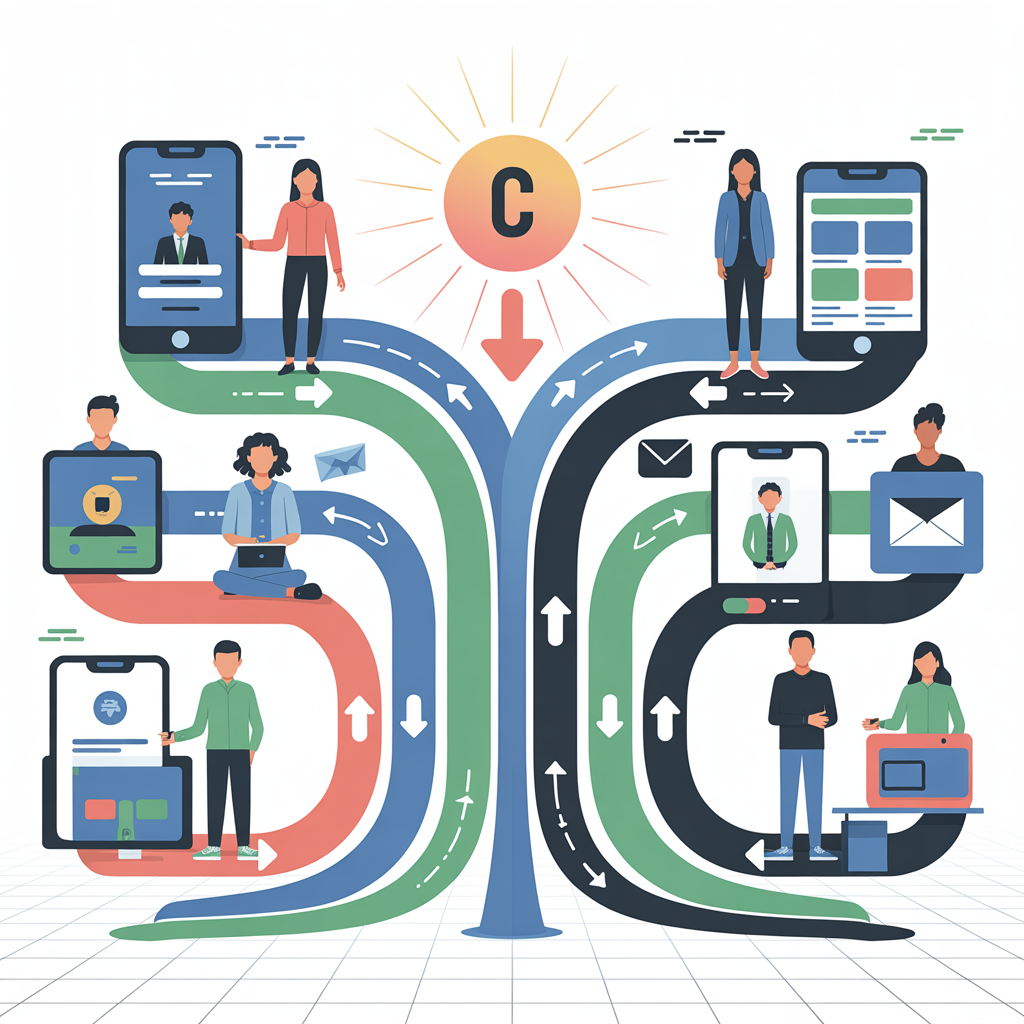
One of the most valuable pieces of insider knowledge is that customer journeys are rarely linear.
Traditional marketing funnels suggest a predictable path from awareness to purchase, but real-world behavior is far more complex.
Customers jump between channels, revisit touchpoints, and often delay decisions.
Recognizing this non-linear behavior allows businesses to design flexible experiences that accommodate different paths rather than forcing customers into rigid flows.
Hidden patterns in customer behavior often reveal opportunities that are not immediately obvious.
For example, analyzing cross-channel interactions may show that customers who engage with both email and social media are more likely to convert than those who use a single channel.
Similarly, patterns in browsing behavior can indicate intent, such as repeated visits to a specific product category.
Identifying these patterns enables businesses to deliver more targeted and effective experiences.
Intent-Based Segmentation
Another important insight is the concept of intent-based segmentation.
Instead of grouping customers solely based on demographics or past purchases, advanced strategies focus on current intent.
This means analyzing real-time behavior to understand what the customer is trying to achieve at that moment.
For instance, a customer searching for product reviews is likely in the consideration stage, while someone adding items to a cart is closer to making a purchase.
Tailoring interactions based on intent increases relevance and improves outcomes.
High-level insights also highlight the importance of context in omnichannel experiences. Context includes factors such as location, device, time of day, and even external conditions.
A customer browsing on a mobile device during a commute may prefer quick, concise information, while someone shopping from a desktop at home may want more detailed content.
Adapting experiences to these contextual factors enhances usability and satisfaction.
Role of Friction
Another layer of insider knowledge involves understanding the role of friction in the customer journey.
Even small obstacles—such as slow loading times, complicated navigation, or inconsistent information—can disrupt the experience and lead to drop-offs.
High-performing organizations continuously identify and eliminate these friction points, creating smoother and more enjoyable interactions.
Data plays a central role in uncovering hidden patterns and insights. However, the real value lies not in the data itself but in how it is interpreted and applied.
Advanced analytics tools allow businesses to track customer behavior across channels, identify trends, and generate actionable insights.
For example, analyzing conversion rates by channel can reveal which touchpoints are most effective and where improvements are needed.
Timing
One often overlooked insight is the importance of timing. Delivering the right message at the right time can significantly impact customer engagement.
For instance, sending a follow-up email immediately after a customer abandons a cart is far more effective than waiting several days.
Similarly, timing promotions to align with customer behavior patterns can increase their effectiveness.
Another hidden pattern is the influence of micro-moments—those brief instances when customers turn to their devices to take action.
These moments are often driven by immediate needs, such as searching for information or making a quick purchase decision.
Capturing and optimizing these micro-moments requires a deep understanding of customer intent and the ability to respond quickly and effectively.
High-level insights also emphasize the importance of consistency across channels. Customers expect a unified experience, regardless of how they interact with a brand.
This includes consistent messaging, branding, pricing, and service quality.
Inconsistencies can create confusion and erode trust, making it essential to maintain alignment across all touchpoints.
Another critical aspect is personalization at scale. While personalization is widely recognized as important, achieving it across multiple channels is a complex challenge.
Advanced strategies involve using artificial intelligence and machine learning to analyze data and deliver tailored experiences in real time.
This includes personalized recommendations, targeted content, and customized offers that resonate with individual customers.
Insider knowledge also points to the importance of feedback loops. Customer feedback provides valuable insights into what is working and what needs improvement.
By collecting and analyzing feedback from various channels—such as surveys, reviews, and social media—businesses can continuously refine their strategies and enhance the customer experience.
Another hidden pattern is the role of trust in customer relationships. Trust is built through consistent, reliable, and transparent interactions.
This includes clear communication, accurate information, and secure handling of customer data. High-level insights show that trust is a key driver of loyalty and long-term engagement.
Cross-channel attribution is another area where insider knowledge can make a significant difference.
Understanding how different channels contribute to conversions allows businesses to allocate resources more effectively.
For example, a customer may discover a product on social media, research it on a website, and complete the purchase in-store.
Recognizing the role of each touchpoint provides a more accurate picture of performance.
Employee engagement is also a critical factor in delivering exceptional omnichannel experiences.
Frontline employees play a key role in interacting with customers, and their ability to access information and provide personalized service can significantly impact satisfaction.
Empowering employees with the right tools and training ensures that they can deliver consistent and high-quality experiences.
Another high-level insight is the importance of scalability. As businesses grow, their omnichannel strategies must be able to handle increased complexity and volume.
This requires flexible systems and processes that can adapt to changing demands without compromising performance.
Technology continues to evolve, offering new opportunities to enhance omnichannel experiences.
From artificial intelligence and automation to augmented reality and voice interfaces, these innovations enable businesses to create more engaging and interactive experiences.
Staying ahead of these trends is essential for maintaining a competitive edge.
Continuous optimization is a key component of successful omnichannel strategies.
By regularly analyzing performance metrics, testing new approaches, and refining processes, businesses can ensure that their strategies remain effective and relevant.
This iterative approach allows organizations to adapt to changing customer expectations and market conditions.
Ultimately, the ability to uncover and leverage insider knowledge, hidden patterns, and high-level insights is what separates leading organizations from the rest.
These deeper layers of understanding enable businesses to create more meaningful, personalized, and seamless experiences that resonate with customers.
As the omnichannel landscape continues to evolve, those who invest in understanding their customers at this level will be better positioned to deliver exceptional experiences.
By combining data-driven insights with a customer-centric approach, businesses can create journeys that not only meet expectations but exceed them in ways that drive lasting loyalty and growth.