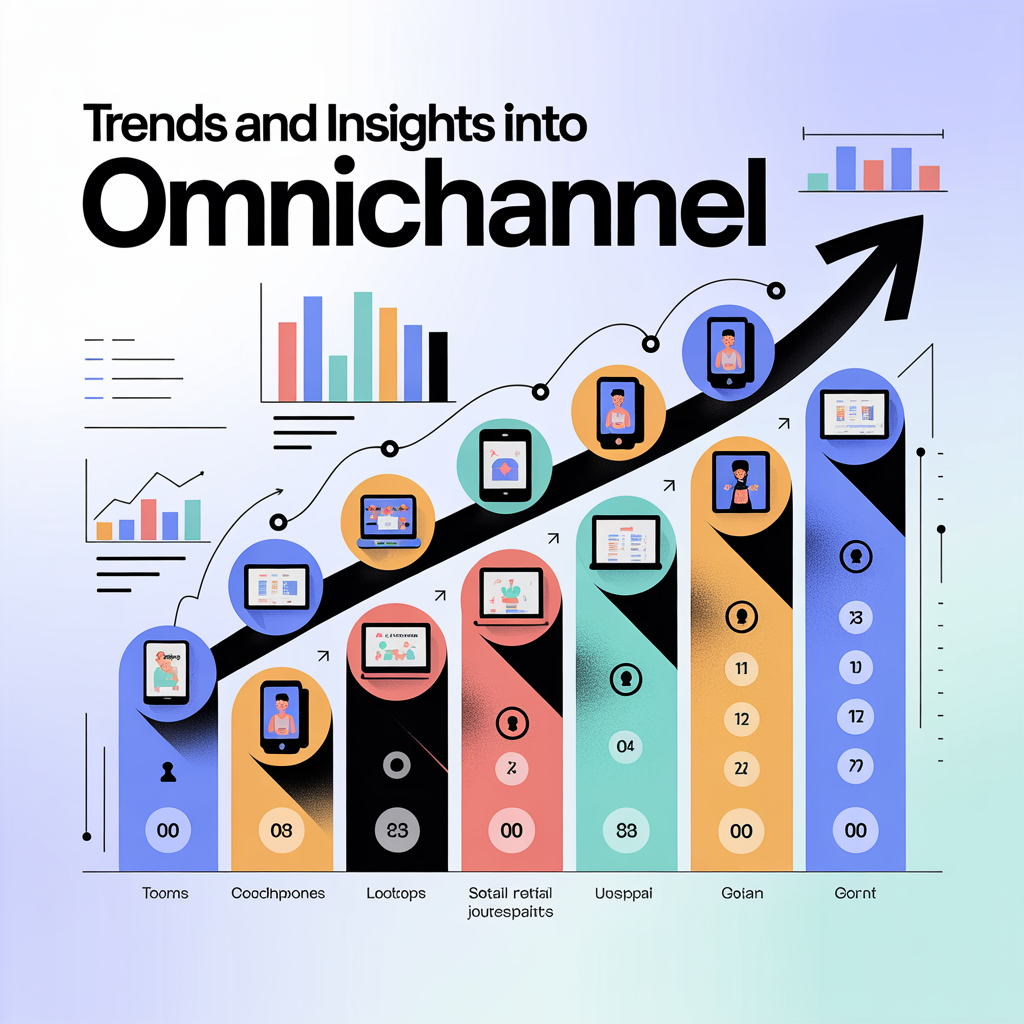
Trends and Insights into Omnichannel
In a world where customer expectations are rising faster than ever, businesses are racing to deliver seamless, personalized, and connected experiences across every touchpoint.
While many organizations focus on well-known omnichannel strategies, the real breakthroughs are happening beneath the surface—through under-the-radar trends, rare insights, and disruptive innovations that are quietly reshaping the future of customer experience.
Omnichannel customer experience is no longer just about integrating channels; it’s about reimagining how customers interact with brands in a deeply connected ecosystem.
The companies leading this transformation are not simply following best practices—they are uncovering overlooked opportunities and leveraging emerging technologies in unexpected ways.
Experience-centric Design
One under-the-radar trend gaining momentum is the shift from channel-centric to experience-centric design.
Traditional strategies often revolve around optimizing individual channels, such as websites or mobile apps.
However, forward-thinking organizations are focusing on the overall experience instead. This means designing interactions that flow naturally, regardless of where they begin or end.
Customers don’t think in terms of channels—they think in terms of outcomes. Aligning strategies with this mindset creates more intuitive and satisfying journeys.
Another rare insight is the growing importance of emotional intelligence in digital interactions. While technology enables efficiency and personalization, it often lacks the human touch.
Businesses are now incorporating emotional cues into their omnichannel strategies, using sentiment analysis and behavioral data to understand how customers feel at different stages of their journey.
This allows for more empathetic responses, whether through tailored messaging, proactive support, or personalized offers.
Ambient Computing
Disruptive innovations are also emerging in the form of ambient computing. This concept involves integrating technology into the environment so seamlessly that it becomes almost invisible.
For example, smart devices, IoT-enabled products, and connected ecosystems allow customers to interact with brands without actively engaging with a specific channel.
A customer might reorder a product through a smart appliance or receive personalized recommendations through a connected device.
These experiences blur the lines between digital and physical interactions.
Another underappreciated opportunity lies in zero-party data.
Unlike third-party or even first-party data, zero-party data is information that customers willingly share with a brand, such as preferences, intentions, and feedback.
This type of data is highly valuable because it is accurate and consent-driven.
Leveraging zero-party data allows businesses to create more personalized and trustworthy experiences, especially in an era where privacy concerns are at the forefront.
Micro-experiences
A rare but powerful insight is the role of micro-experiences in shaping the overall customer journey.
While businesses often focus on major touchpoints, it is the small interactions—such as loading times, confirmation messages, or navigation ease—that leave lasting impressions.
Optimizing these micro-experiences can significantly enhance satisfaction and differentiate a brand from its competitors.
Disruptive innovations in omnichannel customer experience are also being driven by artificial intelligence, but in more advanced and nuanced ways.
Beyond chatbots and recommendations, AI is now being used for real-time decision-making and adaptive experiences.
For example, AI can dynamically adjust website layouts, pricing, or content based on user behavior.
This level of adaptability creates a highly personalized and engaging experience that evolves with the customer.
Composable Architecture
Another under-the-radar trend is the rise of composable architecture.
Instead of relying on monolithic systems, businesses are adopting modular, flexible platforms that can be customized and scaled as needed.
This approach allows organizations to quickly integrate new technologies, experiment with innovative solutions, and respond to changing customer needs without overhauling their entire system.
Rare insights also highlight the importance of cross-channel memory. Customers expect brands to remember their interactions, preferences, and history across all touchpoints.
This goes beyond basic data integration—it requires intelligent systems that can recall context and apply it meaningfully.
For instance, a customer who contacts support after browsing a product should not have to repeat their issue. Maintaining this continuity enhances convenience and builds trust.
Another disruptive innovation is the use of immersive technologies such as augmented reality (AR) and virtual reality (VR).
These tools are transforming how customers explore products and services.
From virtual try-ons to interactive showrooms, immersive experiences provide a deeper level of engagement and help customers make more informed decisions.
When integrated into an omnichannel strategy, these technologies create a cohesive and memorable journey.
Voice and conversational interfaces are also evolving rapidly. While voice assistants are becoming more common, their integration into omnichannel experiences is still in its early stages.
Businesses that invest in voice-enabled interactions can offer greater accessibility and convenience.
For example, customers can search for products, place orders, or receive support using natural language, creating a more intuitive experience.
Another hidden opportunity is leveraging community-driven engagement. Customers increasingly value connection and belonging.
Brands that create communities—whether through social platforms, forums, or loyalty programs—can foster deeper relationships.
These communities also serve as valuable sources of feedback, advocacy, and user-generated content, enriching the overall omnichannel experience.
A rare insight that many organizations overlook is the importance of internal alignment. Disruptive innovations often fail not because of technology, but because of organizational silos.
Marketing, sales, IT, and customer service must work together seamlessly to deliver a unified experience. This requires shared goals, integrated systems, and a culture of collaboration.
Predictive Engagement
Predictive engagement is another area where disruptive innovation is making a significant impact.
By analyzing data and identifying patterns, businesses can anticipate customer needs before they arise.
For example, sending a reminder for a subscription renewal or offering support before an issue escalates demonstrates proactive care.
This not only improves satisfaction but also strengthens customer loyalty.
Sustainability is also emerging as an important factor in omnichannel experiences.
Customers are increasingly conscious of environmental and social issues, and they expect brands to reflect these values.
Integrating sustainability into the customer journey—such as offering eco-friendly options or transparent supply chains—can enhance brand perception and create a deeper emotional connection.
Digital Twins
Another under-the-radar trend is the use of digital twins in customer experience. A digital twin is a virtual representation of a customer, created using data and predictive models.
This allows businesses to simulate and optimize interactions before they happen.
While still an emerging concept, digital twins have the potential to revolutionize personalization and journey design.
Continuous experimentation is a hallmark of organizations that excel in omnichannel customer experience.
Rather than relying on static strategies, they constantly test new ideas, measure results, and iterate.
This agile approach enables them to stay ahead of trends and adapt to changing customer expectations.
The integration of advanced analytics is also critical. Businesses must go beyond basic metrics and explore deeper insights into customer behavior, preferences, and engagement.
This includes understanding not just what customers do, but why they do it. These insights inform more effective strategies and drive better outcomes.
Ultimately, the future of omnichannel customer experience lies in embracing what others overlook.
Under-the-radar trends, rare insights, and disruptive innovations offer opportunities to create truly differentiated experiences.
Businesses that are willing to explore these areas, invest in emerging technologies, and challenge conventional thinking will be the ones that lead the next wave of transformation.
As the landscape continues to evolve, staying ahead requires curiosity, adaptability, and a commitment to innovation.
Those who tap into these hidden layers of omnichannel strategy will not only meet customer expectations but redefine them in ways that set new standards for the industry.