
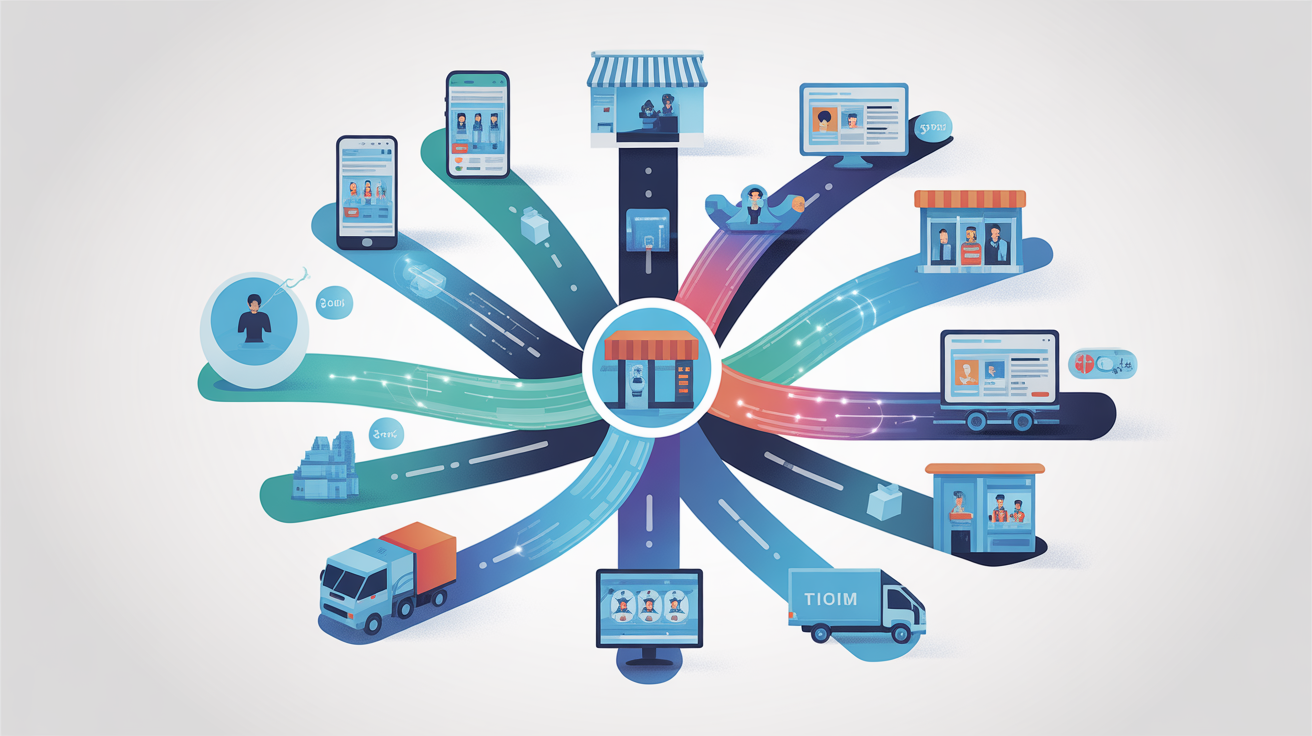
In today’s experience-driven economy, omnichannel customer experience has become one of the most critical differentiators for brands.
While many organizations focus on visible elements like websites, apps, and social media, the real power of omnichannel lies behind the scenes.
Beneath every seamless interaction is a complex system of processes, technologies, and strategies working together to create a unified journey.
Understanding these little-known secrets through a deep dive into how omnichannel ecosystems function can unlock new levels of performance and customer satisfaction.
Data Flow:
At a surface level, omnichannel customer experience is about consistency across platforms. But behind the scenes, it starts with data architecture.
One of the most overlooked aspects is how data flows between systems.
Many companies still operate with disconnected tools—separate platforms for marketing, sales, customer support, and inventory.
The hidden secret to success is building a unified data infrastructure that allows these systems to communicate in real time.
This ensures that every department has access to the same customer information, enabling cohesive and informed interactions.
A deep dive into high-performing organizations reveals the importance of data normalization and governance.
It’s not enough to collect data; it must be accurate, standardized, and usable.
Without proper data governance, inconsistencies can lead to errors in personalization, miscommunication, and poor customer experiences.
Establishing clear protocols for data entry, storage, and usage is a foundational step that often goes unnoticed but plays a vital role in omnichannel success.
Role of APIs:
Another behind-the-scenes secret is the role of APIs (Application Programming Interfaces). APIs act as the connectors that allow different systems to share information.
They enable real-time updates, such as syncing customer profiles, updating inventory levels, and processing transactions across channels.
Without robust API integration, achieving a seamless omnichannel experience becomes nearly impossible.
This technical layer is rarely visible to customers but is essential for delivering the smooth interactions they expect.
Customer Identity Resolution:
Customer identity resolution is another critical yet underappreciated component.
Customers interact with brands through multiple devices and channels, often using different identifiers such as email addresses, phone numbers, or social media accounts.
The challenge is linking these interactions to a single customer profile.
Advanced identity resolution techniques use algorithms and data matching to create a unified view of each customer.
This allows businesses to track behavior accurately and deliver personalized experiences across all touchpoints.
One of the most fascinating behind-the-scenes elements is journey orchestration engines. These systems use rules, triggers, and predictive models to guide customers through their journey.
For example, if a customer browses a product but doesn’t make a purchase, the system might trigger a follow-up email, a push notification, or a retargeting ad.
These actions are carefully timed and personalized based on the customer’s behavior, creating a sense of continuity and relevance.
A deep dive into personalization reveals that it goes far beyond surface-level customization. True omnichannel personalization involves contextual awareness.
This means understanding not just who the customer is, but what they are doing, where they are, and what they need at that moment.
For instance, a customer browsing on a mobile device late at night may respond better to a quick, simplified experience, while a desktop user during the day might prefer more detailed information.
Delivering this level of personalization requires sophisticated data analysis and real-time decision-making.
Another little-known secret is the importance of latency and system performance.
Customers expect instant responses, whether they’re loading a webpage, receiving recommendations, or interacting with support.
Behind the scenes, this requires optimized infrastructure, fast servers, and efficient code. Even a delay of a few seconds can disrupt the experience and lead to frustration.
High-performing companies invest heavily in performance optimization to ensure that every interaction is smooth and responsive.
Inventory visibility is another critical factor, especially for retail businesses. Customers want accurate information about product availability, regardless of the channel they use.
Achieving this requires real-time inventory management systems that update across all platforms.
For example, if a product is sold in-store, the online inventory must reflect that change immediately. This level of synchronization prevents issues like overselling and enhances customer trust.
Employee-facing technology is also a key part of the omnichannel ecosystem. While much attention is given to customer-facing tools, the systems used by employees are equally important.
Providing staff with access to unified dashboards, customer profiles, and communication tools enables them to deliver better service.
For example, a customer service representative who can see a customer’s entire interaction history can resolve issues more efficiently and provide a more personalized experience.
Another behind-the-scenes aspect is the role of automation workflows. These workflows handle repetitive tasks such as sending emails, updating records, and managing campaigns.
However, the real value lies in how these workflows are designed. Advanced workflows use conditional logic and triggers to adapt to different scenarios.
This ensures that customers receive relevant and timely communications without manual intervention.
Security and compliance are also critical components that operate behind the scenes.
With increasing concerns about data privacy, businesses must ensure that customer information is protected.
This involves implementing encryption, access controls, and compliance with regulations such as GDPR and other data protection laws.
While customers may not see these measures, they play a crucial role in building trust and safeguarding the brand’s reputation.
A deep dive into analytics reveals another layer of complexity.
Omnichannel analytics involves tracking customer interactions across multiple platforms and consolidating the data into actionable insights.
This requires advanced tools and expertise to interpret the data effectively.
Metrics such as customer lifetime value, channel performance, and engagement rates provide valuable insights that drive strategic decisions.
Another hidden element is the testing and optimization process. Successful omnichannel strategies are not static; they evolve based on continuous experimentation.
A/B testing, multivariate testing, and user feedback are used to refine experiences and improve outcomes.
This iterative approach ensures that businesses can adapt to changing customer preferences and stay ahead of the competition.
Cross-functional collaboration is another essential but often overlooked factor. Omnichannel success requires alignment between marketing, sales, IT, customer service, and operations.
Behind the scenes, this involves regular communication, shared goals, and integrated workflows.
Without collaboration, even the most advanced technologies cannot deliver a cohesive experience.
Scalability is also a critical consideration. As businesses grow, their systems must be able to handle increased traffic, data volume, and complexity.
This requires flexible architectures and cloud-based solutions that can scale as needed. Planning for scalability from the beginning prevents bottlenecks and ensures long-term success.
Finally, innovation plays a key role in staying competitive. The omnichannel landscape is constantly evolving, with new technologies and trends emerging regularly.
Businesses must be willing to experiment with new approaches, such as artificial intelligence, augmented reality, and voice interfaces.
These innovations can enhance the customer experience and provide new ways to engage with audiences.
The true power of omnichannel customer experience lies in what customers don’t see.
Behind every seamless interaction is a sophisticated network of systems, strategies, and processes working in harmony.
By understanding these behind-the-scenes elements and uncovering little-known secrets through a deep dive, businesses can build more effective and impactful omnichannel strategies that deliver exceptional results and lasting customer relationships.